Istockphoto 1411760839 612x612 1
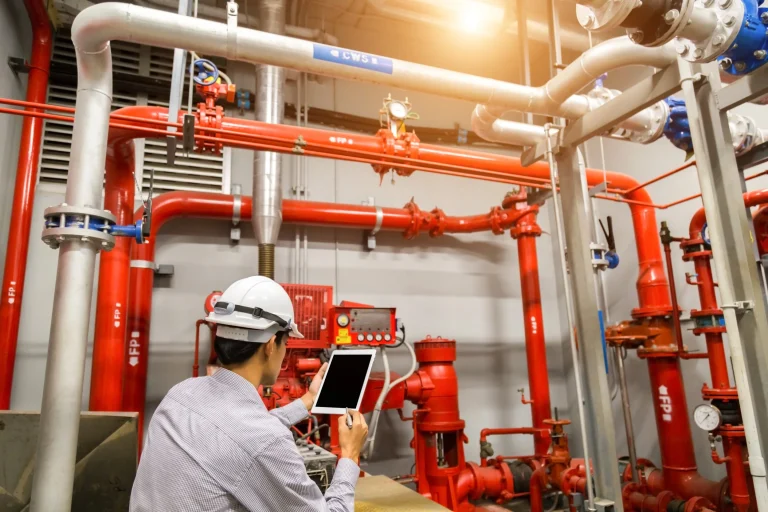
Fire panel installation service

Wet System

These are the simplest and most common type of sprinkler system installation. They involve relatively few components. A wet system provides fixed fire protection. It uses pipes that are always filled with pressurized water from a dependable source, during a fire, water is continuously discharged through sprinklers located directly over and close to the fire area. The fire is detected using closed, heat-sensitive automatic sprinklers. These are spaced out according to recognized installation standards. When activated,
the sprinklers distribute the water over a specific area to control or extinguish the fire. This precise approach to extinguishment minimizes water damage.

Applications:

• Residential Occupancies
• Commercial Establishments
• Warehouses / Factories
• Schools / Institutions
• Production Facilities
• Community Centers
• Workshops / Garages

Shutterstock 2289916991 optimized
Unnamed

Dry System

Adry-pipe system utilizes water as an extinguishing agent. Pipes run from the dry pipe valve, a remote valve located in a heated space, to the automatic fusible sprinklers. The pipes are filled with pressurized air or nitrogen, Dry pipe systems are used in cold areas where the water would freeze, partially or entirely, if kept in the pipes. The air in the pipes keeps the dry pipe valve in the closed position. The dry-pipe valve prevents water from entering the pipes until a fire causes one or more of the sprinklers to operate, once this happens, the air escapes and the dry pipe valve opens. Water then enters the pipe, flowing through the open sprinklers and onto the fire.
Once this happens, the air escapes and the dry pipe valve opens. Water then enters the pipe, flowing through the open sprinklers and onto the fire.

Applications:

• Valuable Artifacts
• Aircraft Hangars
• High-Hazard Installations
• Computer Rooms
• Libraries
• Archives
• Refrigerated Spaces

Vanguard Citgo 2019 177 1080x675 1
Kidde C02 Fryer Notifier 320 Panel

Deluge System

These are fixed fire protection systems in which the pipe system remains empty until a valve, termed the deluge valve, opens in response to a fire. This releases pressurized water from open nozzles or sprinklers. Deluge systems are more complex than wet and dry pipe systems. Depending on its configuration, a deluge system can be activated hydraulically, pneumatically, electrically, manually, or by any combination of these means. But, in all cases, the deluge valve itself is activated hydraulically. When a detection device is activated, the deluge valve opens sand water flows into the piping system. The water is discharged through all spray nozzles or sprinklers simultaneously.

Applications:

• Power Plants
• Aircraft Hangars
• Chemical Processing Facilities
• Paints Storage
• Fuel Storage Tanks
• Gaseous Liquid Storage Facilities
• Outdoor Transformers

Vanguard Citgo 2019 177 1080x675 1
Kidde C02 Fryer Notifier 320 Panel

Foam-water System 

A foam-water system is composed of a special system of pipes connected to a source of foam concentrate and a water supply. The system uses appropriate discharge devices to control and/or extinguish fires which require a smothering and cooling agent. The piping system is connected to the water supply by a control valve. The valve is opened when automatic detection equipment, located in the same area, detect a fire. Foam-water systems are designed to distribute a foam-water solution onto a specific hazard area. Upon exhaustion of its foam concentrate supply, the system releases water until it is shut off manually. Some flammable products may require different types of foam.

Applications:

• Extraction plants
• Flammable Liquid Storage
• Refineries
• Aircraft Hangars
• Heliports
• Jet Engine Test Facilities
• Marine Applications

Carbon dioxide System

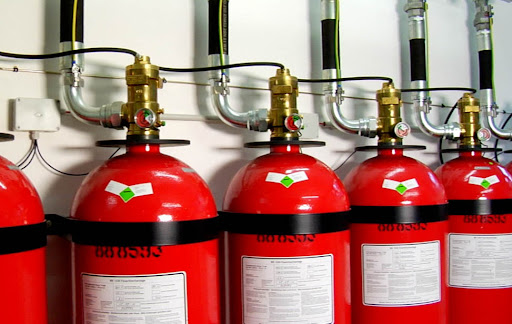
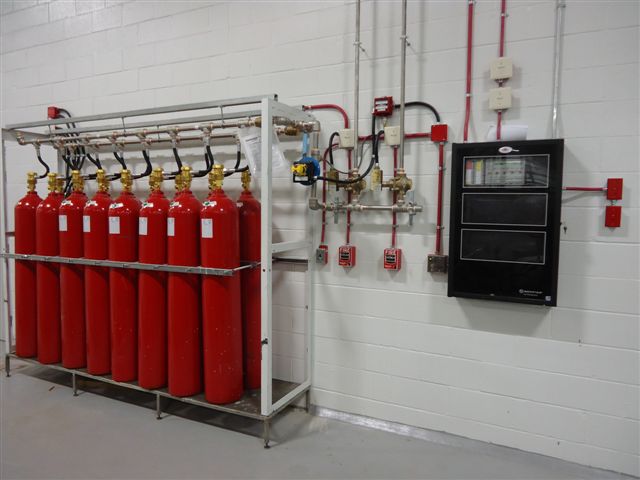
Carbon dioxide was the first gas to be used as a fire extinguishing agent. It is a chemically-inert, electrically non-conductive and odorless gas. A Carbon dioxide system includes detectors, a control unit, agent storage cylinders, piping and discharge nozzles. Carbon dioxide extinguishes fires by reducing Oxygen levels to stop
combustion. Carbon dioxide systems have three settings: They can completely flood hazard areas (for unoccupied areas), protect processing and machinery areas, or be manually operable as a hand-hose system in emergency situations. In each of these cases, the duration and rate of agent discharge are customized.

Istockphoto 1207368679 612x612 1

Applications:
• Combustible Liquids
• Liquefied Gases
• Electrical Equipment
• Smoldering Fires
• Power generation
• Cable Tunnels
• Transformers
FM-200 System

FM-200 is an industry-leading, eco-friendly, gas-based fire suppression system. It offers a halon-free alternative to the ozone-depleting Halon 1301. It is among the fastest fire protection systems available: It can extinguish chemical and electrical fires in under 10 seconds. FM-200 systems limit damage, lower repair costs, and reduce downtime and, most importantly, increase personnel and property safety. The FM-200 agent is stored in liquid form in cylinders. It is pressurized with nitrogen, thus greatly reducing storage space. Therefore, the FM-200 is suitable for applications where space is limited,combustion. Carbon dioxide systems have three settings: They can completely flood hazard areas (for unoccupied areas), protect processing and machinery areas, or be manually operable as a hand-hose system in emergency situations. In each of these cases, the duration and rate of agent discharge are customized.

Fire protection system 1024x683 1 768x512

Applications:

• Data Processing Centers
• Server Rooms
• Telephone Switches
• Process Control Rooms
• Museums
• Sophisticated Electronic Equipment
• Hospitals

Novec 1230 System

The Novec 1230 Fire Protection Fluid used by this system is a next-generation halon alternative. It balances performance, human safety and environmental concerns. The Novec 1230 fluid can be effectively utilized to control fires, flood fire areas, and suppress explosions. It can be used in manned spaces. Because its usage concentration is much lower than its No Observable Adverse Effects level (NOAEL), the Novec 1230 Fire Protection Fluid is one of the safest, most viable
halon alternatives. It is an effective extinguishing agent because of its zero electrical conductivity.

Fire protection system 1024x683 1 768x512

Applications:

•Data Processing Centers
• Server Rooms
• Telephone Switches
• Process Control Rooms
• Museums
• Marine Applications
• Oil and Gas industry
Tank Protection  System

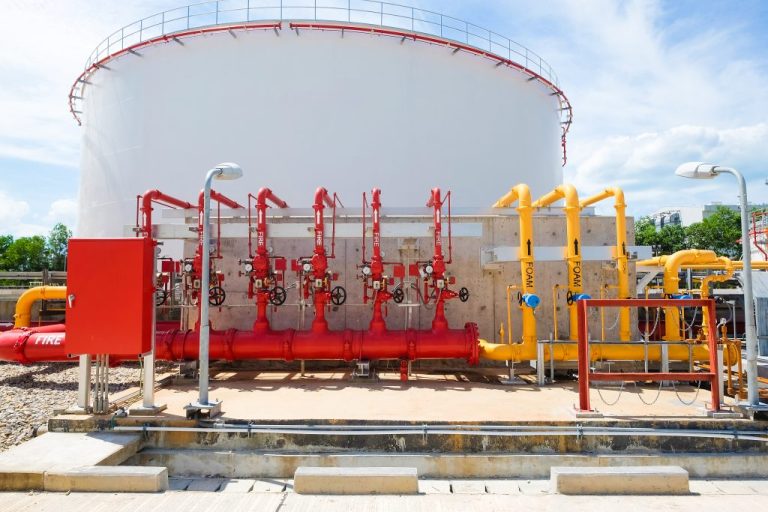
In a storage tank fire protection system, fixed discharge devices are installed around the hazard. The discharge devices connect to pipes, which terminate a control valve, safe distance away from the hazard- normally outside a dike wall and the control valve is connected to main fire water line. The type of extinguishing agent to use is determined by the nature of the hazard. If engineered, installed and maintained correctly, a tank protection system will work reliably for many years. The system can be fixed or semi-fixed, depending on its location, intended application, and the type of the storage tank.

Pexels jakubzerdzicki 27662902 768x512

Applications:

• Liquefied Gas Storage Tanks
• Hazardous Chemical Tanks
• Oil Storage Tanks
• Fuel Storage Tanks
• Flammable Liquid Storage Tanks
• Industrial Processing Vessels
• LPG Storage Facilities

Radio card hands 175935 82

Water Mist System

A water mist fire suppression system uses
a fine mist to extinguish fires quickly. This system releases less water than a traditional wet sprinkler system does. The use of water means that the mist system is safe and non-toxic for both humans and the environment. A water mist system is suitable in any setting where water use must be Limited. Water mist systems have 3 classes: class I refers to the range between 100 and 200 um, class II to 200-400 um and class III to 400-1000 um. Fire control and suppression by Water Mist is strongly related to the interaction between the sprayed flow and flames.

Pexels jakubzerdzicki 27662902 768x512

Applications:

• Machine Spaces
• Diesel Generators
• Power Plants
• Gas Turbines
• Museums
• Highway Tunnels
• Transportation
 

IStock 1097682848 768x512

kitchen hood system

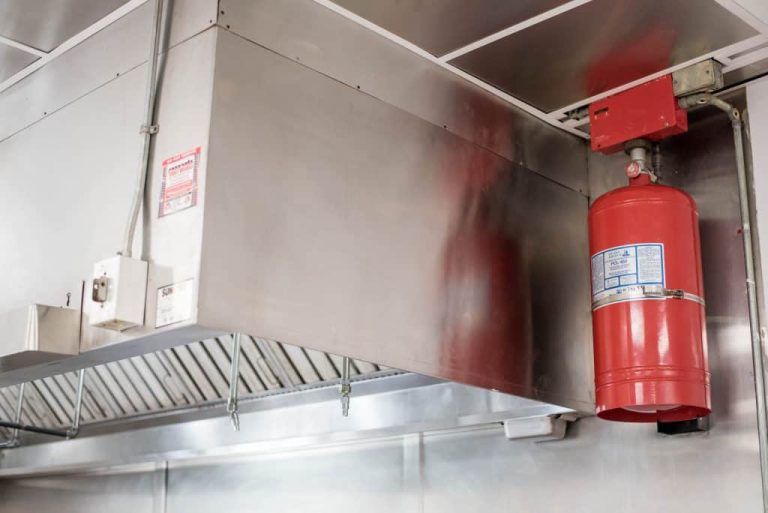
A kitchen hood fire suppression system is a pre-engineered system that uses a wet chemical agent, stored air pressure, fixed nozzles and a fixed agent distribution network. The detection network, consisting of fusible links or detectors, automatically detects a fire. The system releases a low pH extinguishing agent. The agent travels through the hood and duct and onto the kitchen appliances.
The agent distributes itself in the form of minute droplets, creating an insulating coat. This cuts off the oxygen supply to the source of the fire, preventing combustion from continuing and thus stopping the fire.
JLA 6716 1 1024x684 1 768x513

Applications:

• Commercial Cooking
• Restaurants
• Food Joints
• Hotels
• Military Bases
• Hospitals
• Universities

IStock 1097682848 768x512

Conventional Fire Detection system

Conventional fire detection and alarm systems are suitable for the early detection of fires. They have very simple configurations, Due to their simplicity, conventional systems are most reliable and economical when used in small or medium-sized facilities. Conventional Systems are popular because they are user-friendly and easy to maintain. In its simplest configuration, a conventional system cannot pinpoint the exact location of a fire.
However, a facility can be subdivided into definite areas or zones. For example, in a multistory building, each floor can represent a zone. Zoning allows the user to determine the specific location of the fire.

JLA 6716 1 1024x684 1 768x513

Applications:

• Residential Occupancies
• Schools / Institutions
• Banks / Business Centers
• Community Centers
• Warehouses / Factories
• Libraries
• Commercial Centers

IStock 1097682848 768x512

Addressable fire Detection system

Addressable fire alarm systems can quickly detect fires and identify their exact location. They are also easy to maintain, an addressable system is a flexible one. It can be configured for use in medium or large facilities, and can aid evacuation plans. Every device/unit connected to the system has its own unique address. When a device detects a fire, the main control panel displays the address of that device. This informs the user of the exact location of the fire, so it can be quickly extinguished. The addressable system's ability to pinpoint the exact location of afire saves valuable time and effort. Addressable system can be combined with fire fighter telephone system.

JLA 6716 1 1024x684 1 768x513

Applications:

• Hospitals
• Banks
• Libraries
• Data Centers
• Museums
• High Rise Buildings
• Commercial centers

IStock 1097682848 768x512

Security Alarm System 

A security alarm is a system designed to detect unauthorized entry into a building or area. Security alarms are used in residential, commercial, industrial, and military properties for protection against burglary (theft) or property damage, as well as personal protection against intruders. security alarm systems may also be combined with closed-circuit television and may interface to access control systems. Security Systems range from small noisemakers to multi-area systems with computer monitoring and control. The most basic alarm consists of one or more sensors to detect intruders, and an alerting device to indicate the intrusion.

JLA 6716 1 1024x684 1 768x513

Applications:

• Commercial Banks
• Financial Institutions
• Military Facilities
• Research Facilities
• Correctional Facilities
• Data Processing Centers
• VIP Lounges

IStock 1097682848 768x512

Access Control System 

An access control system determines who is allowed to enter or exit, where they are allowed to exit or enter, and when they are allowed to enter or exit. It uses computers to solve the limitations of mechanical locks and keys_ The electronic access control system grants access based on the credential presented, when access is granted,
the door is unlocked for a predetermined time and the transaction is recorded. When access is refused, the door remains locked and the attempted access is recorded. The system will also monitor the door and alarm if the door is forced open or held open too long after being unlocked,

Applications:

• Commercial Banks
• Financial Institutions
• Military Facilities
• Research Facilities
• High Class Hotels
• Data Processing Centers
• Hospitals

IStock 1097682848 768x512


CCTV System

Closed-circuit television (CCTV) is the use of video cameras to transmit a signal to a specific place, on a limited set of monitors_ It may employ point to point
(P2P), point to multipoint, or mesh wireless links. CCTV systems may operate continuously or only as required to monitor a particular event. A more advanced form of CCTV, utilizing digital video recorders (DVRs), provides recording and extra features such as motion
detection and email alerts. More recently, decentralized IP cameras, some equipped with megapixel sensors,
support recording directly to network-attached storage devices, or internal flash for completely stand-alone

Applications:

• Commercial Banks
• Airports / Railway Stations
• Military Facilities
• Research Facilities
• High Class Hotels
• Universities / Institutions
• Hospitals

IStock 1097682848 768x512

Intrusion Detection

An intrusion detection system (IDS) is a combination of devices and software application that monitors property and facilities for malicious activities, illegal / forced entries or policy violations and produces reports to a management station. IDS come in a variety of configurations and approach, the goal of detecting
suspicious traffic. There is network based (KIDS) and host based (HMS) intrusion detection systems. Some
systems may attempt to stop an intrusion attempt but this is neither required nor expected of a monitoring system. Intrusion detection systems typically record
information related to observed events, notify security administrators and produce reports.

Fire protection system 1024x683 1 768x512

Applications:

• Military Installations
• Airports & Cargo Facilities
• Research Institutions
• Large Scale Factories
• Correctional Facilities
• Courts
• Government Assemblies